
The Starting Block 31
Starting Block Reflecting on this issue’s theme: sound and music.
BY DANIEL BROMBERG
PHOTOS BY DANIEL BROMBERG
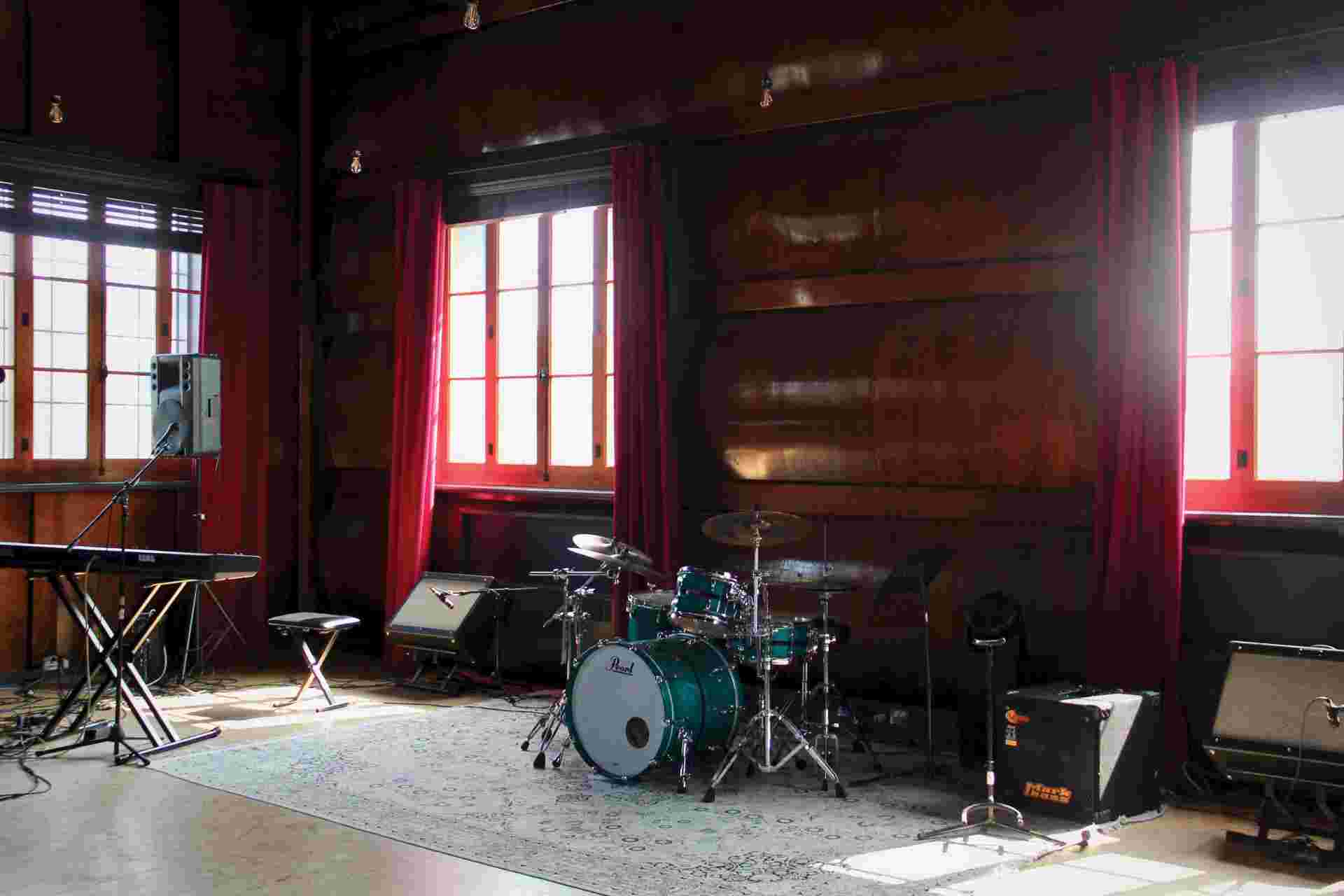
At the northwest corner of Montréal’s Saint-Henri neighbourhood, there’s a recording studio unlike any other. Built in the 1930s as one of five RCA Victor Studios (its siblings in Nashville, Rio de Janeiro, New York and Los Angeles have long since been transformed or demolished), this space boasts a patented technology designed to bend sound itself.
“That’s a good angle: preservation,” says David Cervantes, who now oversees the space, under the name Studio Victor. “This is the only studio that still has its original wooden polycylindrical walls. Think about reverberation and how sound bounces off certain shapes.”
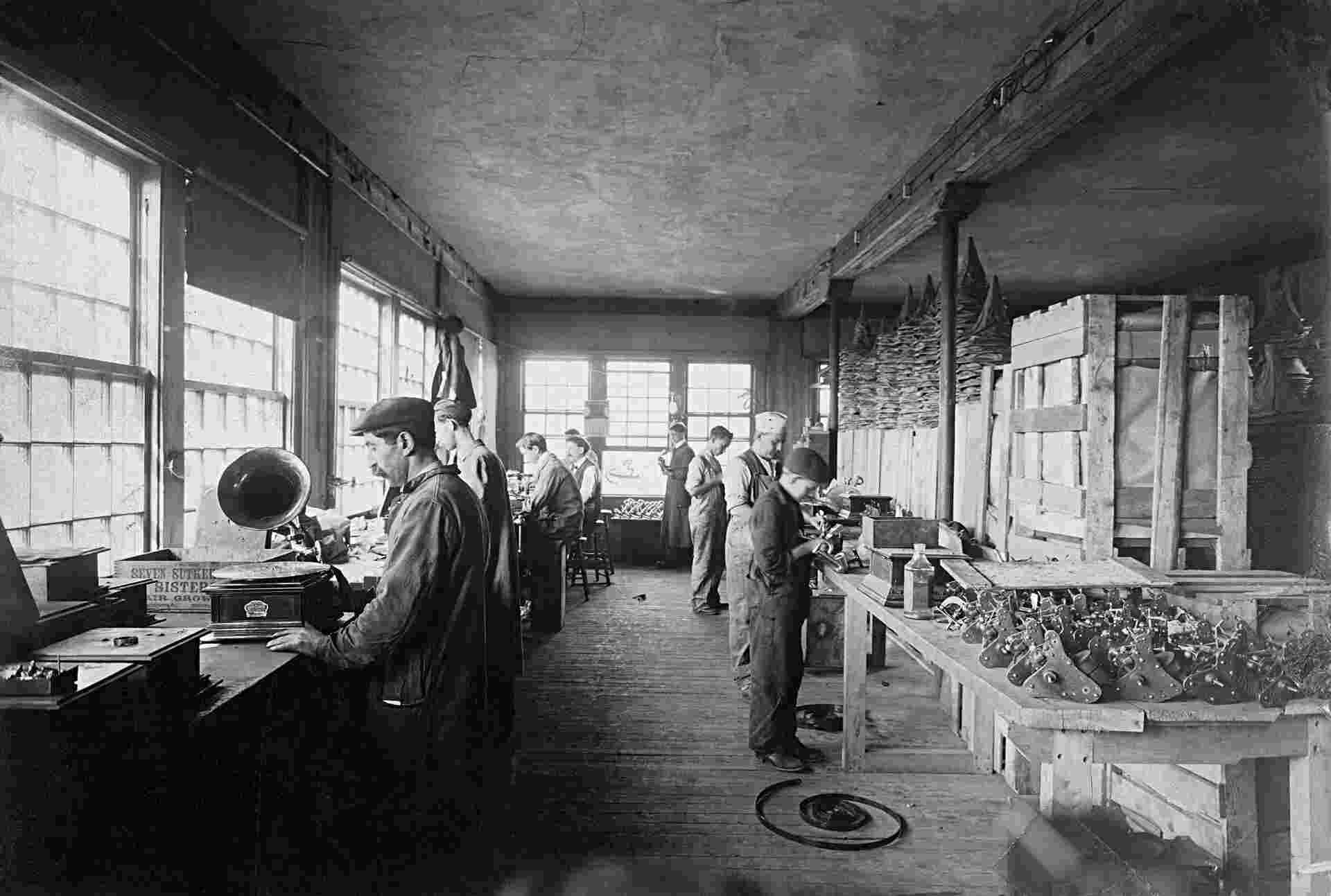
The story began decades earlier with Emile Berliner, the German-born inventor who brought the gramophone to Montréal. Berliner eventually opened a factory at Rue Saint-Antoine and Rue Lenoir, in Saint-Henri, the site that would later become RCA Victor’s Canadian headquarters. It was from this very building that the Victrola gramophone was produced, its emblem, inscribed with the words “His Master’s Voice,” a signpost of Montréal’s early dominance in recorded sound.
The studio originally functioned as a state-of-the-art laboratory, hosting acoustic music and vocal recordings. By the 1940s, however, RCA was exploring new ventures—everything from radar and sonar research to military contracts—and the wood surfaces and high ceilings were hidden behind drywall as the space was repurposed.
Gramophone Assembling Room, Berliner Gramophone Company, Montréal, QC, 1910, Musée McCord, MP-1982.69.7
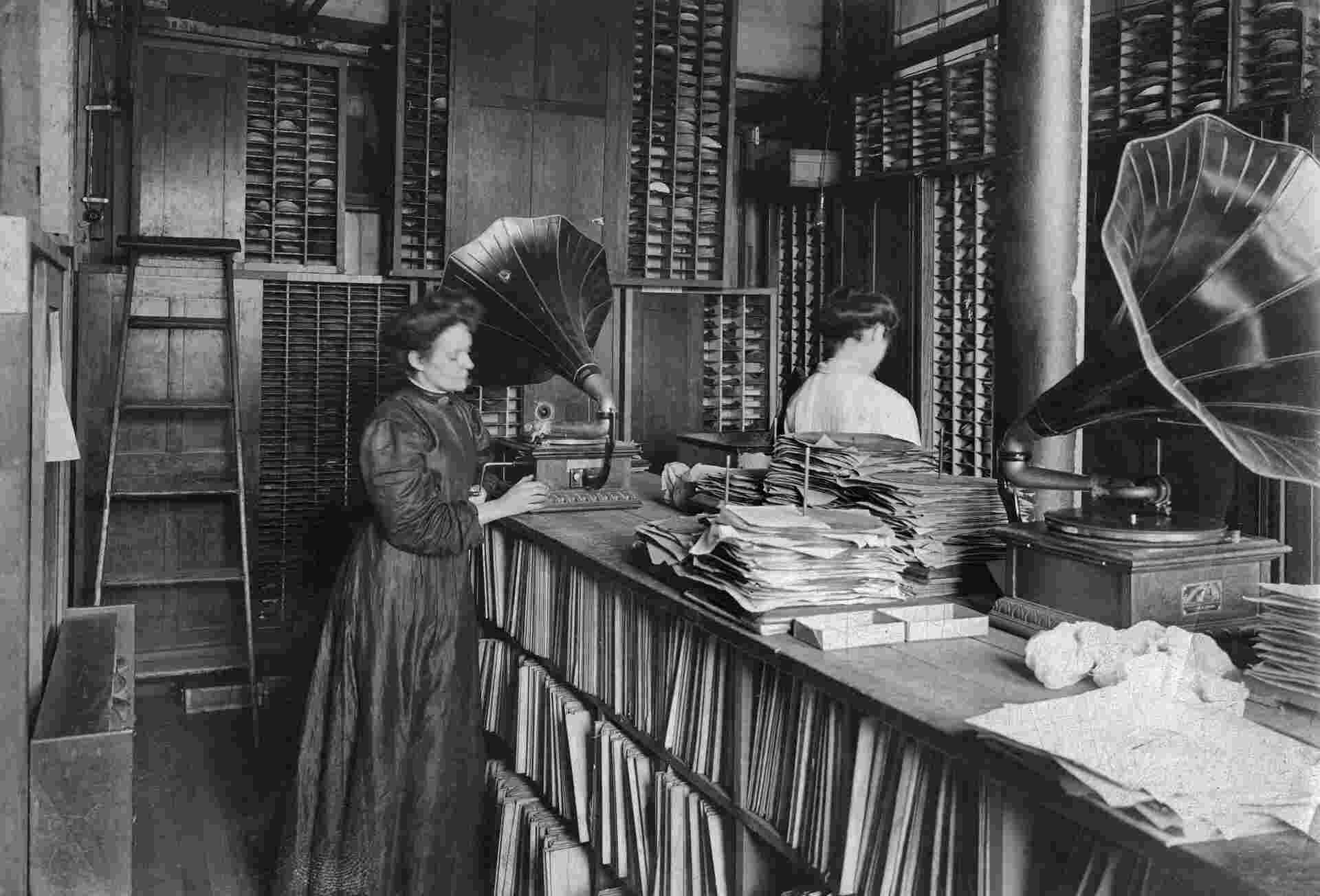
Record Matrix Room, Berliner Gramophone Company, Montréal, QC, 1910, Musée McCord, MP-1982.69.5
Emile Berliner, the inventor of the microphone, gramophone and flat disc, founded The Berliner Gram-o-phone Company of Canada in 1899 and built his manufacturing plant, a five-storey brick building, at Rue Saint-Antoine and Rue Lenoir in 1908. The company was acquired in 1924 by the Victor Talking Company, which later became RCA Victor.
When leaks and renovations exposed the forgotten wooden walls in the early 1980s, Montréal entrepreneur Gaétan Pilon sensed an opportunity. He opened Studio Victor in 1985, adding a mixing room and launching what became one of the city’s most important recording facilities. For three decades, countless albums were cut here—including by Québécois artists Roch Voisine, Les Cowboys Fringants and Jean Leloup—giving the space a second life as a premier destination for musicians. It also played host to several international producers, like the Beatles’ George Martin, Alan Parsons and Bette Midler.
Pilon closed Studio Victor in 2016, announcing the space a victim of the advancement in new technologies such as digital recording that challenged the economics of the traditional analog format. But not for long. It opened again, in the hands of a sound design studio that refurbished it to meet their needs. After they vacated, Cervantes stepped in, determined not to let the space stand shuttered, and reopened the studio for rental use while offering the loft-style office space as part of a broader membership experience.
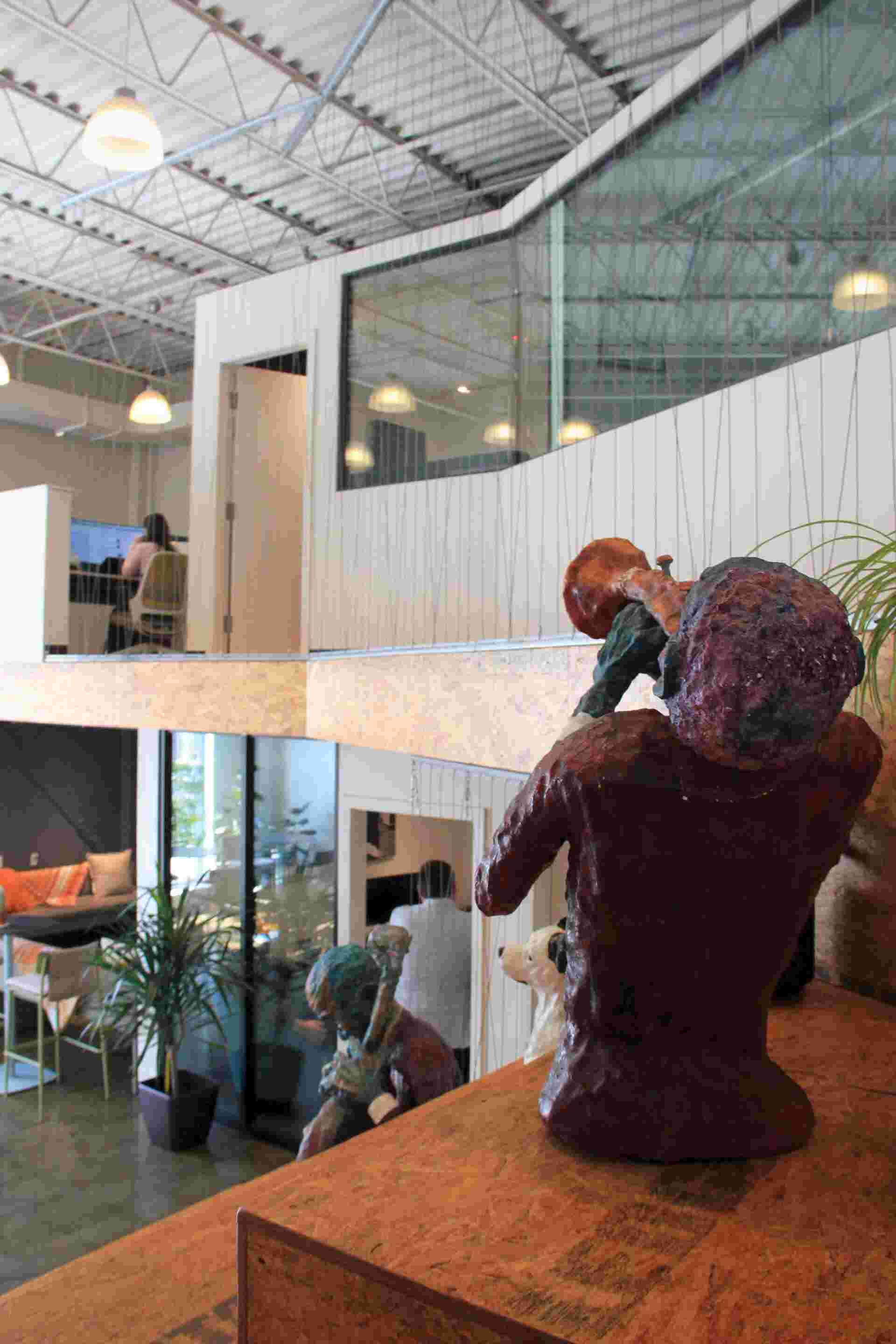

Saint-Henri-born sound engineer and producer Gaétan Pilon closed Studio Victor in 2016. But just one year later, La Hacienda Creative took hold and, with Newsam Construction and MXMA Architecture & Design, renovated the space to pay homage to its past while also updating it to create complementary bright and lively workspaces and collab-friendly chipboard bleacher seating.
It’s now open to professionals who can book it for writing sessions, classes and jam sessions, and amateurs can also rehearse in a room once reserved for stars—a shift Cervantes sees as part of its democratic new life. “It’s funny,” he says. “Some musicians never got to play in Studio A during their professional careers. Now they come back as amateurs and finally get the chance.”
Nearly a century on, the studio is alive and well. What began as a manufacturing plant now doubles as a working studio and a living museum of Canadian music history—and as a reminder that architectural heritage, if carefully preserved, can be a continuing legacy.

A framed image of the Saint-Henri factory in the early 20th century. The billboard shows the “His Master’s Voice” (HMV) trademark, with dog Nipper listening to the gramophone, which brought mass-produced music to Canada and marked the beginnings of the country’s recording industry.
Starting Block Reflecting on this issue’s theme: sound and music.

The Moment A live recording and conversation at The Grand in Calgary.
My Space A Toronto DJ rehearsal space that takes craft seriously.

The Business Making performance more accessible with the Inside Out Theatre’s Col Cseke.

